
About Our Women's Masonic Lodge in New York
A Women's Freemason Lodge in Manhattan Since 1993
UNIVERSALIS opened its doors in 1993 as the first Chapter of the Women’s Grand Lodge of Belgium in the United States. The name Universalis embraces the concept of universal inclusion and diversity. We initiate women from all walks of life and cultures. We currently meet in midtown Manhattan every third Monday of the month, September through June. We are committed to exploring universal topics through in depth discussions and written works of architecture. Freemasonry is not for curiosity seekers, but for individuals willing to embark on a lifelong journey into the depths of their own beliefs and morals.
“Masonic morality”
“Masonic morality” is frequently discussed, but seldom clarifies what it truly means. For those who have sought initiation and entered the Temple, it can seem obvious—almost instinctive. Freemasonry is a reflective journey—one that mirrors broader ethical traditions. In today’s world—filled with public opinion, media obsession, and endless moral and political debates—Masonic Morality has an important role. However, it doesn’t shout, demand, or preach. It is something lived quietly through personal effort, symbolic practice, and the steady shaping of character from within. It is a form of becoming—a path shaped by the ongoing tension between who we are, who we could be, and who we’re striving to become. It unfolds gradually, with each moment of effort, each exchange, each silence, something deeper within us is being formed. Masonic moral tools don’t hand down rules—they offer a subtle yet powerful framework for self-transformation.
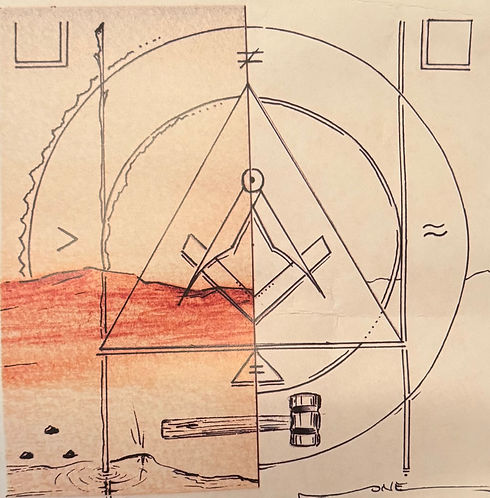
Practice of the Masonic Ritual:
One of the first surprises for someone entering Freemasonry is discovering that there’s no official rulebook for what to believe or how to act. No specific directions are handed down, no doctrine or dogma to follow.
It doesn’t come from lectures or lessons—it comes through symbols, rituals, and the space itself. It’s in the design of the Temple, the weight of silence, the rhythm of ceremonies. Masonic ethics are felt, lived, and gradually understood. It is the experiential that leads to wisdom and knowledge.
Ancient and Accepted Scottish Rite, the duties of a Freemason are to:
-
Think and speak with conscious awareness
-
Do good
-
Seek the truth
-
Embrace the principles of Liberty, Equality, and Fraternity in the lodge and incorporate them into your daily life.
-
Help advance humanity by exploring significant moral and social issues.
-
Promote Masonic ideals through living examples.
Lecture topics explore a captivating array of themes, from philosophical and spiritual insights to ethical dilemmas and vibrant social and cultural discussions.
What is Masonry?
Freemasonry is a traditional philanthropic, philosophical, and initiatory society founded on brotherhood and sisterhood. Its methods offer a path to self-improvement and self-discovery through universal symbols. Its symbolism and philosophy teach Freemasons about the true integration of nature and humanity. In this way, Freemasonry represents a universal alliance based on solidarity. Freemasonry makes no distinction between nationalities, race, religious belief, philosophical views, wealth, or social standing. It promotes freedom of conscience.
Who is a Mason?
A ason embodies the essence of a "free" woman, driven by strong ethical principles and an unwavering commitment to the greater good. She passionately believes in the freedom of conscience and actively strives for the moral and intellectual advancement of humanity. This noble pursuit demands not only a lifelong commitment but also the qualities of sincerity and humility in the relentless quest for truth. Her dedication to the well-being of her fellow man is a beacon of hope and inspiration, urging us all to aspire to the same ideals and make a positive impact on the world through constant evolution through self improvement.
Is there a difference between the Masonic Traditions?
Our tradition is non-dogmatic, championing complete freedom of belief that empowers individuals to think for themselves and forge their own paths. This openness fosters innovation, diversity, and a deeper understanding of one another, enriching our community and collective wisdom. All Masonic Obediences share similar principles. In Freemasonry, the term "rite" refers to different systems of rituals used to confer degrees. While all Masonic lodges confer the three basic degrees (Entered Apprentice, Fellowcraft, and Master Mason), the rituals used to do so can vary depending on the rite. There are dozens of Masonic Rites historically, but about 8–10 major Rites are actively practiced today across the globe. Some are recognized and regular, while others exist outside mainstream Grand Lodges and may be considered irregular or adogmatic, especially in liberal or co-Masonic traditions. Two prominent Masonic rites are the Scottish Rite and the York Rite.
Prominent and Well-Known Masonic Rites
Here are some of the best-known and historically significant ones:
-
Ancient and Accepted Scottish Rite (AASR)
- 33 degrees (including the 3 Blue Lodge degrees in some jurisdictions)
- Global, especially popular in Europe, the Americas
-
York Rite (or American Rite)
- Includes degrees of Royal Arch, Cryptic Masonry, and Knights Templar
- Common in North America
-
French Rite (Rite Français)
- Developed in 18th-century France
- Emphasizes Enlightenment values and rationalist traditions
-
Swedish Rite
- Christian in character
- Practiced in Scandinavian countries and affiliated areas
-
Rectified Scottish Rite (Rite Écossais Rectifié)
- Christian, chivalric, and mystical
- Practiced mainly in continental Europe
-
Rite of Memphis-Misraïm
- Esoteric and Egypto-mystical, with up to 99 degrees in some versions
- Popular in some irregular or independent bodies
-
Emulation Rite
- Used primarily in the United Grand Lodge of England for the first three degrees
- Not a higher-degree system, but a ritual style of Blue Lodge Masonry
-
Modern Rite (Rite Moderne)
- Also known as the Adogmatic French Rite
- Prominent in liberal and mixed-gender Masonic traditions
-
Brazilian Rite
- Developed in Brazil; a blend of AASR and York Rite influences
-
Schröder Rite
- Developed in Germany
- Simple, symbolic, and rooted in Enlightenment ideals
What takes place during a Lodge meeting?
Masons are not just builders; they are architects of transformation. In the sacred space of the Temple, Masons come together to construct their inner Temple—a journey that is guided by Ritual and empowered by the use of symbolic tools. A Masonic lodge meeting is a structured, symbolic gathering where members (called Freemasons) conduct the business of the lodge and engage in rituals meant to encourage moral growth, personal reflection, and fraternal connection. Here's a breakdown of what typically happens.
Degree Work (when scheduled)
- Initiation or Advancement: If a candidate is being initiated or progressing to the next degree, a large portion of the meeting may be devoted to:
- Symbolic instruction through allegory
- Oaths or obligations
- Presentation of working tools and moral teachings
- The "arcanes" of the Masonic degrees refer to the symbolic and initiatory secrets embedded in each degree—the spiritual or philosophical truths that lie beneath the outer ritual. These arcanes are not just secret passwords or signs, but deep teachings transmitted through symbols, allegory, and experience.
Masonic Education
- Some lodges include talks or discussions on Masonic philosophy, symbols, ethics, or social topics.
- Universalis offers degree instructions every month, TBA. It is a scheduled event and mandatory for advancement to any higher degree.
- Reflection: Members may be invited to consider the spiritual or philosophical implications of the ritual work.
Agape and Refreshment
- After the formal lodge closes, Masons often gather informally for a meal or refreshments where they relax, share toasts, and continue fellowship. It is a vital bonding tradition where all of the members share their lives and continue discussions.
Why does Masonry examine symbols?
The symbol serves an esoteric purpose; it is a method that suggests what cannot be communicated through teaching or direct representation. Freemasonry examines symbols because symbols are the language that speaks directly to our intuition, imagination, and inner wisdom in a way that plain words often cannot. Symbols are timeless carriers of meaning, and in Masonry, they serve as tools for moral, philosophical, and spiritual development. It enables the Mason to incorporate her intuition in the pursuit of her secret truth. Therefore, we can view the symbol as an initiatic principle. Symbolism aims to connect the human mind to what lies beyond it, to bond the element to the whole and to the universal.
Is Freemasonry considered a sect?
Freemasonry is not a closed sect; instead, it warmly welcomes individuals from all walks of life. A true Mason embraces free thought and acts in accordance with their ideals both inside and outside the organization. It is essential to note that Freemasonry does not apply coercion; rather, it actively fosters a spirit of independence and open dialogue. Freemasons take personal responsibility for their growth and progress, pursuing development without undue pressure. Join us in a community that values freedom of thought and the pursuit of knowledge!
A sect is usually defined as:
- A subgroup that splits from a larger religious tradition, often with distinct dogmas or exclusive beliefs
- A group that claims unique access to truth or salvation
- Often closed, demanding conformity, or rigid in its ideology
Why Freemasonry Is Not a Sect
Freemasonry:
- Does not teach a doctrine of salvation — It is not a religion, nor does it offer religious absolution or eternal reward.
- Does not claim exclusive truth — Masons come from many faiths and are encouraged to seek truth personally—there's no single Masonic belief system.
- Does not proselytize or require conversion — People request to join Freemasonry of their own free will; there is no missionary effort or demand to leave one's religion.
- Is not dogmatic — It presents symbols and rituals, not commandments. Masons are invited to interpret the meaning for themselves.
- Accepts all faiths (within broad theistic boundaries)
What’s the deal with all the secrecy?
It’s more accurate to say that Freemasonry calls for discretion, rather than secrecy. It offers a unique method—a philosophical approach to both personal and collective growth. What makes it feel “secret” is that the journey is deeply personal and can only be truly understood through direct experience.
It is also an oath of every Freemason never to reveal anything seen or experienced in the Temple to the outside world. This is a fundamental tradition designed to protect knowledge and members from discrimination outside the lodge. Yes, you can find plenty of information about Masonry online, but that won’t give you the richness of being in the Lodge, participating in the rituals, or forming the meaningful connections that happen in person.
Freemasonry is experiential!